

Bringing Natural Stone and Stainless Steel Together
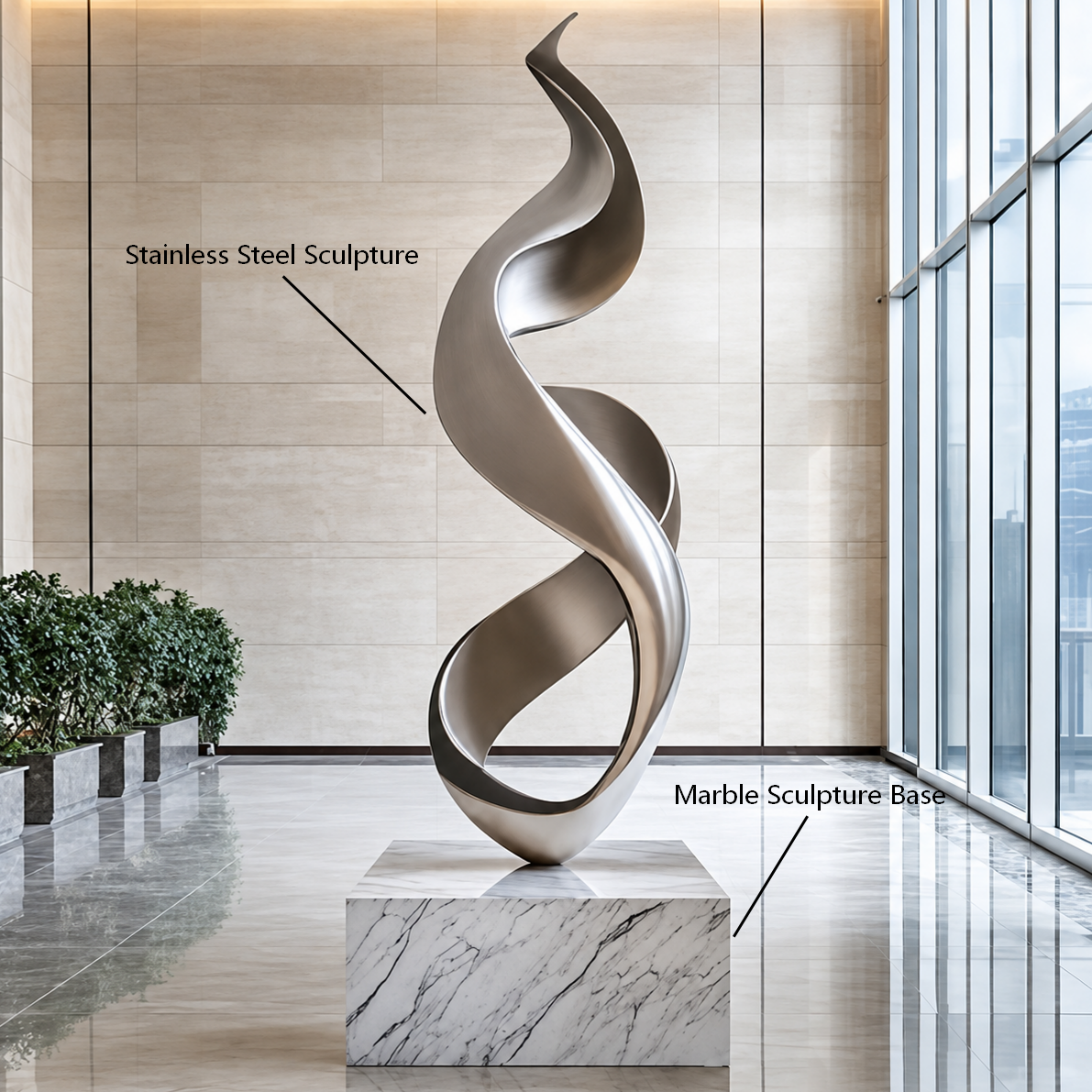
Stainless steel sculptural form on a veined marble pedestal in a contemporary interior.
Material selection is an important part of planning an interior project. Natural stone offers distinctive colors, veining and surface characteristics, while stainless steel provides a different material expression for fixtures, cabinetry and selected furniture components.
Used together, they can support a wide range of applications, from individual furniture pieces to coordinated kitchen interiors and architectural features.
For project teams, the challenge is not simply choosing attractive materials. It is understanding how they will work together in terms of appearance, dimensions, fabrication and installation.
1. Marble and Stainless Steel in Kitchen Applications
Kitchen countertops and backsplashes are among the most visible applications of natural stone.
Marble introduces natural variation across the surface, while stainless steel faucets and cabinetry can provide a more consistent finish. Their combination can work across contemporary residential kitchens, hospitality interiors and other designed spaces.
Before fabrication, several details deserve attention:
- Slab selection: Review the stone’s color, veining and natural variation in relation to the overall design.
- Layout planning: Consider vein direction, slab positioning, joints and the relationship between the countertop and backsplash.
- Fixture coordination: Confirm sink openings, faucet positions, cabinet dimensions and other relevant measurements.
- Finishing details: Review exposed edges, transitions and the junctions between stone and metal components.
Addressing these points early helps the project team coordinate the different materials before installation.
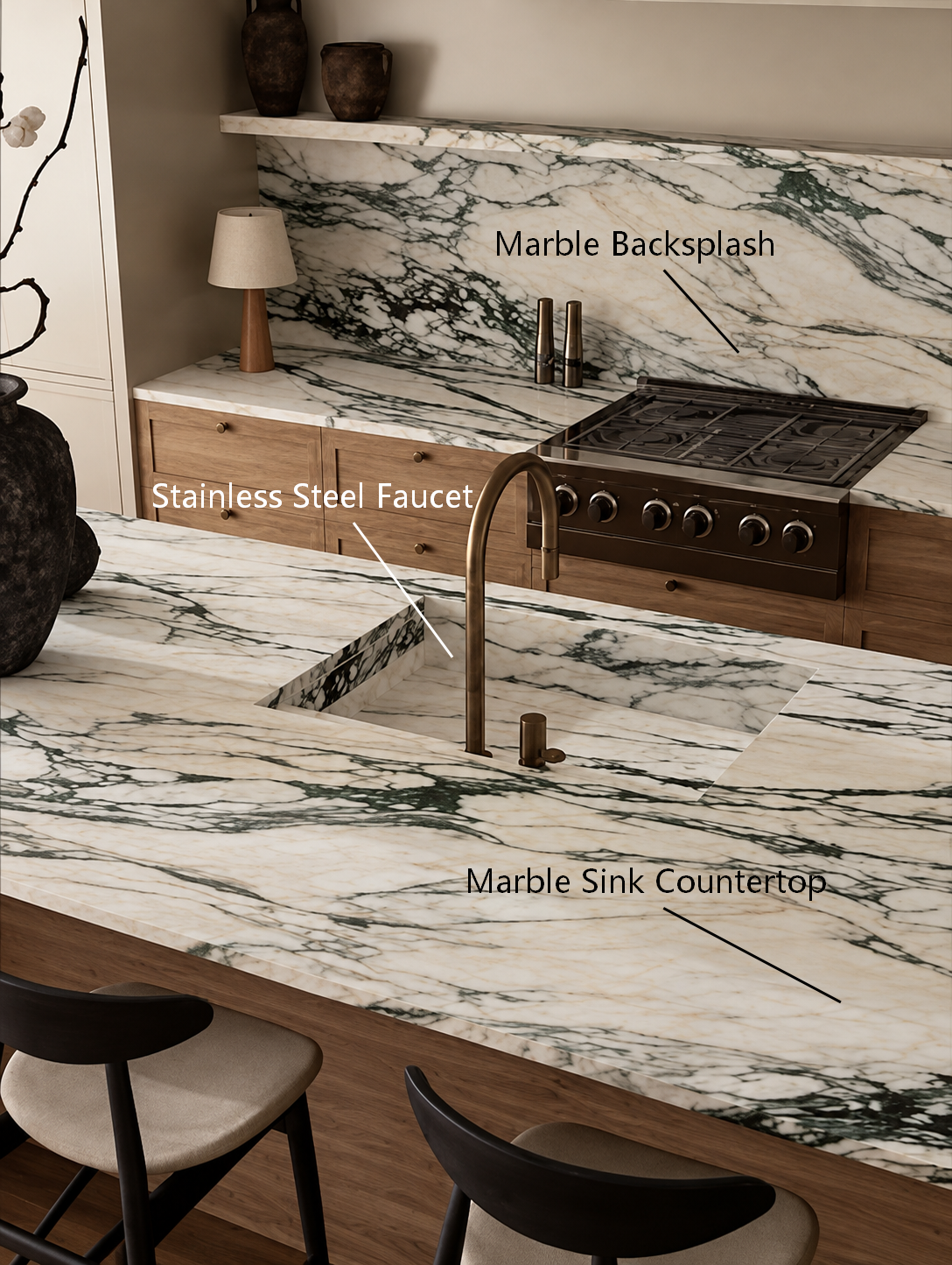
Marble kitchen countertop and backsplash paired with a stainless steel faucet.
2. Custom Stone Furniture with Metal Components
Natural stone is also used in coffee tables, side tables and other bespoke furniture.
A marble tabletop paired with a metal base combines the individuality of a natural surface with a contrasting supporting structure. The final appearance depends on the stone selection, tabletop shape, edge treatment, base design and proportions.
For custom furniture projects, the material specification should be considered together with the intended dimensions, weight, support and connection method.
Metal components may be specified in stainless steel or other metals, depending on the design. The exact material and surface finish should be confirmed rather than assumed from appearance alone.
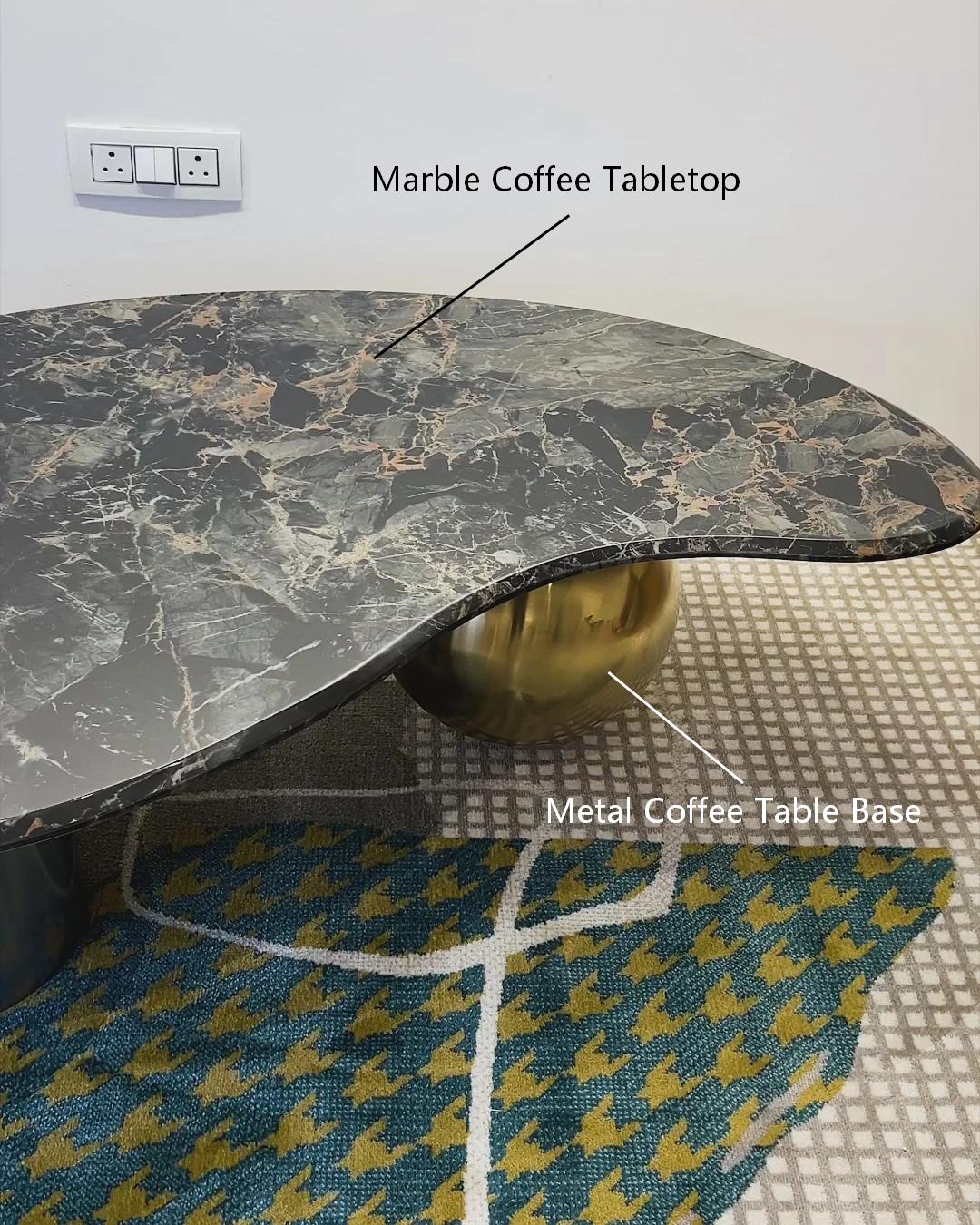
Marble coffee table featuring a sculptural metal base.
3. Stone Pedestals and Architectural Features
Stone bases and pedestals can also be paired with metal sculptures or decorative installations.
In these applications, the stone is more than a background surface: its proportions, color and veining contribute to the overall composition. The metal element introduces a contrasting form, whether geometric, sculptural or minimal.
For project planning, the pedestal dimensions, load requirements, fixing details and finish coordination should be established according to the specific installation.
These considerations are particularly relevant to feature pieces in hotel lobbies, reception areas and commercial interiors.
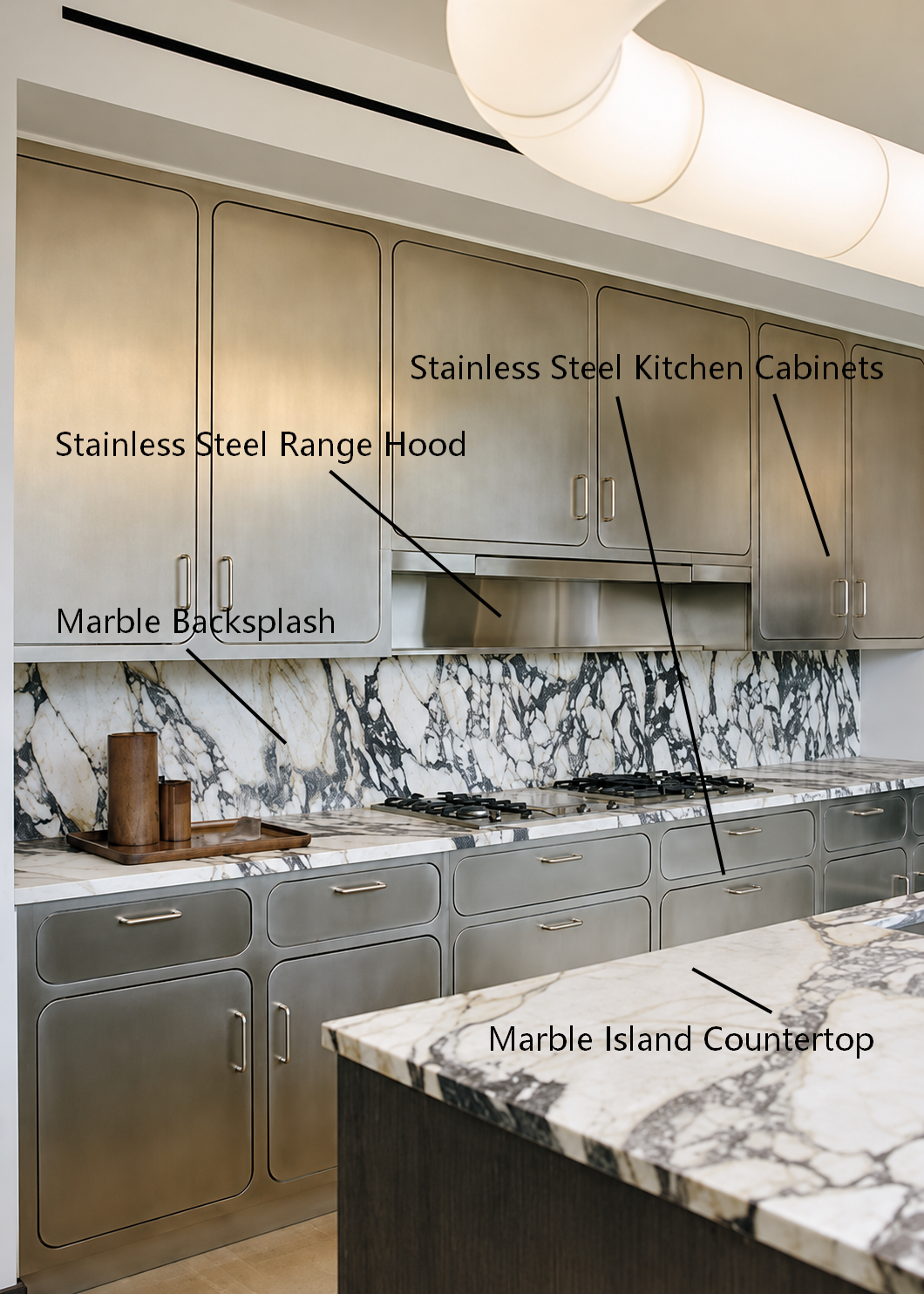
Marble kitchen countertops and backsplash coordinated with stainless steel cabinetry.
4. Coordinating Materials from Specification to Installation
When natural stone and stainless steel appear in the same project, coordination should begin before production.
A practical workflow includes:
- Material selection: Confirm the stone type, slab appearance and metal specification.
- Design review: Check dimensions, layout, edge details and the relationship between components.
- Fabrication planning: Confirm cut-outs, finishing requirements, interfaces and any necessary fixing details.
- Quality inspection: Review the fabricated components against the approved specifications.
- Packing and delivery: Protect finished stone surfaces, edges and metal finishes during handling and transportation.
The precise workflow will depend on the scope of the project and the components being supplied. Clear specifications and communication help reduce avoidable discrepancies between the design and the finished product.
A Material Approach for Different Project Requirements
Natural stone and stainless steel can be used across kitchens, furniture and architectural features, but the right combination depends on the project’s design intent, technical requirements and budget.
For architects, interior designers, contractors and project buyers, considering the materials as part of one coordinated specification can make it easier to evaluate the stone, define fabrication requirements and plan the final application.
Morningstarstone works with natural stone for a range of interior and architectural applications, supporting material selection and stone fabrication according to project requirements.
Working on a natural stone project? Contact Morningstarstone to discuss material options, application requirements and your project specifications.
Post time: Oct-19-2026